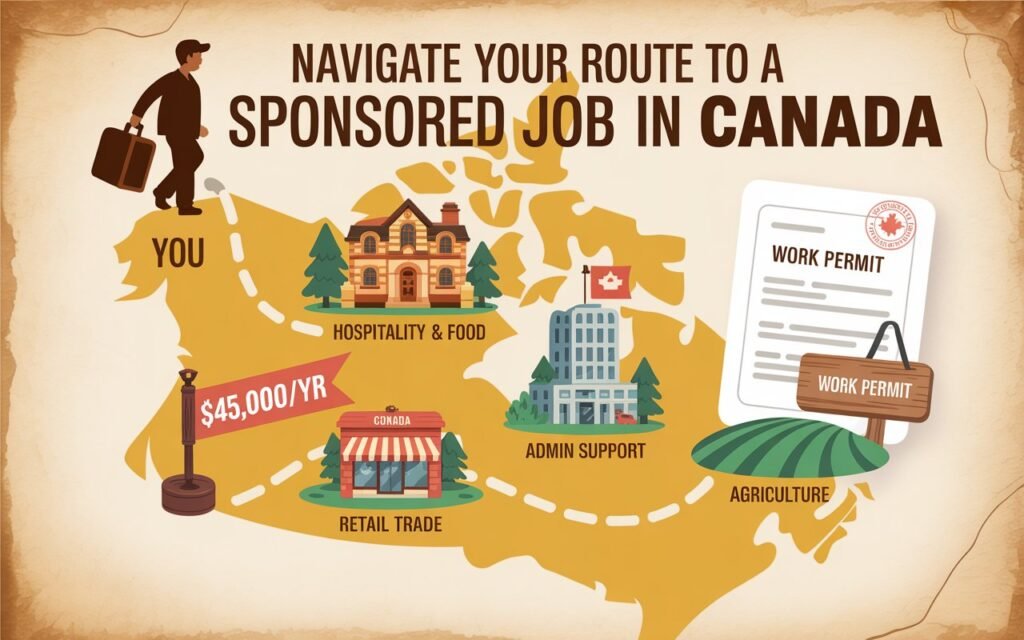
$45000 Visa sponsorship jobs in Canada are drawing global attention as employers compete for skilled talent. Many newcomers aim for positions that offer security, clear work rights, and growth potential. The job market remains strong in diverse fields and is suited to candidates ready to relocate.
Foreign professionals now prioritize visa sponsorship jobs that align with long-term goals. Canada’s demand for skills in healthcare, IT jobs, engineering, trades, and business means more doors open for international talent. This guide breaks down roles, visas, requirements, and clever job search tips.
1. Canada’s Demand for Skilled Workers and Visa Sponsorship
Canada’s economy needs millions of workers over the next decade. Industries like healthcare jobs in Canada and engineering jobs in Canada struggle to fill roles locally. This gap creates opportunities for foreign talent through work permit Canada routes and employer sponsorship.
The most sought-after Canada jobs with sponsorship often pay above $45,000 yearly. Employers willing to sponsor must show they can’t find Canadians first. This is done through LMIA (Labour Market Impact Assessment) approvals. Once that’s done, skilled workers can secure visas tied to their job offers.
2. Top Fields Offering $45000 Visa Sponsorship Jobs in Canada
Roles that often feature visa sponsorship jobs with annual wages around $45,000 and up include healthcare support, administrative posts, technical trades, and junior IT positions. These jobs give newcomers a foothold while they build Canadian experience.
Many of these positions qualify for pathways like Express Entry or the Provincial Nominee Program, where work experience may lead to permanent residency.
3. Table of High-Demand Roles with Sponsorship (2026)
| Occupation Category | Typical Wage Range CAD | Sponsorship Likelihood |
|---|---|---|
| Healthcare Support | $45,000–$60,000 | High |
| Junior IT Specialist | $45,000–$70,000 | Medium–High |
| Skilled Tradesperson | $45,000–$80,000 | High |
| Administrative Coordinator | $45,000–$58,000 | Medium |
| Logistics & Warehouse | $45,000–$65,000 | High |
| Customer Service Rep | $45,000–$55,000 | Medium |
This snapshot shows common entry points. Wages rise as experience and credentials grow.
4. Visa Options That Support Sponsorship Jobs
Canada provides several immigration pathways for those with job offers. The choice depends on your occupation, experience, and long-term goals.
A work permit in Canada tied to an employer often starts with LMIA approval. After working for a set period, many candidates become eligible for permanent residence. The Express Entry system awards points for age, education, and job offers from Canadian employers.
The Provincial Nominee Program lets provinces pick candidates based on local labour needs. This can fast-track residency if you work in a targeted job.
5. Common Requirements for International Applicants
To qualify for visa sponsorship jobs in Canada, you generally need:
- A valid job offer from a Canadian employer.
- LMIA or LMIA-exempt job offer.
- Relevant qualifications and credential assessment.
- Proof of language proficiency (often IELTS or CELPIP).
Many employers review your resume closely for skills relevant to the Canadian workforce. Presenting clear achievements and jargon-free descriptions improves your chances.
6. How to Find the Right Sponsorship Job
Search Canada jobs on major portals like Indeed Canada, Workopolis, and LinkedIn. Recruitment agencies in Canada often list positions that specifically include sponsorship.
Tailor your resume to the Canadian style. Highlight measurable results rather than generic tasks. Practice interview answers that reflect local workplace culture.
Networking matters. Join professional groups on LinkedIn or local job fairs if you’re already in Canada.
👉👉See Also: Visa Sponsorship Jobs in Australia 2026!
7. Table of Popular Visa Pathways for Sponsored Workers
| Visa Pathway | Key Benefit | Who It Suits |
|---|---|---|
| Employer-Specific Work Permit | Allows job-linked work rights | Those with LMIA job offers |
| Express Entry (with job offer) | Points boost for fast processing | Skilled professionals |
| Provincial Nominee Program | Local job focus, provincial support | Candidates with provincial ties |
| LMIA-Exempt Work Permit | Quicker processing in some cases | Certain international agreements |
These routes each serve different applicant profiles. The right path depends on your job offer and long-term plans.
8. Salary Expectations and Cost of Living in Canada
Even at $45,000 annually, many newcomers find Canada’s standard of living manageable. Cities like Calgary and Ottawa offer lower living costs compared to Toronto or Vancouver. If your goal is long-term settlement, consider regional centres where the demand for skilled trades in Canada is strong, and sponsorship is easier.
Salaries often climb quickly once you gain Canadian work experience and local credentials.
9. What Employers Look for in Candidates
Canadian employers expect clear communication skills and job readiness. Foreign credentials may need assessment. Use recognized bodies to validate your degrees or certifications.
Language remains a top filter. Showing strong English or French results helps. In healthcare and technical fields, employers often require a license or certification from Canadian authorities.
10. Mistakes That Hurt Your Chances
Many applicants send generic resumes. This reduces your visibility for visa sponsorship jobs. Avoid vague descriptions. Instead, focus on achievements using data. For example, “Managed inventory for 200+ items, reducing stock discrepancies by 15%” reads stronger.
Also, don’t skip industry-specific terms. Recruiters in IT want to see technologies you’ve used. In healthcare, list your clinical experience clearly.
11. How to Prepare for Interviews in Canada
Prepare for behavioural questions. Employers want to see how you handle teamwork and problem-solving. Practice responses that show your adaptability to a new environment.
Research the company’s mission and values. This shows you’re serious about the role and not just the visa.
12. Transitioning from Temporary Work to Permanent Residency
Many who take visa sponsorship jobs aim for permanent residency. The Express Entry system rewards Canadian experience. Typically, a year of full-time work improves your points score. Meanwhile, the Provincial Nominee Program may offer faster routes if local labour needs match your skills.
Plan early. Keep documents organized. Track work hours and maintain proof of employment.
13. Benefits of Taking a $45000 Sponsorship Job

Taking a job with sponsorship gives you legal work status and the ability to send money home or save for the future. Many entry-level roles lead to pay raises within months.
Work experience in Canada looks great on future applications, both to employers and to immigration systems.
14. How www.careersfame.com Helps Job Seekers
Sites like www.careersfame.com curate high-quality job listings. They also offer tips on resume writing and upcoming job fairs that target international applicants.
Keeping an eye on new postings helps you apply early, which improves your chances for LMIA jobs and sponsorship offers.
15. Real Success Stories From Sponsored Workers
Hearing from people who secured visa sponsorship jobs in Canada adds motivation. Many report improved lifestyles, healthcare access, and opportunities to bring families.
Some started in customer service rep roles and moved into supervision. Others in skilled trades in Canada advanced to project leadership. These stories remind applicants that Canada rewards dedication.
16. The Importance of Networking in Securing Sponsorship Jobs
Networking is often the secret to unlocking job opportunities in Canada. Many visa sponsorship jobs are filled through referrals, rather than traditional job boards. Attending industry events, joining professional groups on LinkedIn, and connecting with Canadian recruiters can give you an edge. This will not only help you secure $45000 Visa sponsorship jobs in Canada, but it can also provide valuable insights into the job market and trends.
17. How to Improve Your Resume for Canadian Employers
Tailoring your resume to match Canadian standards can increase your chances of landing a visa sponsorship job. Canadian employers value clear, concise resumes with a focus on achievements rather than duties. Use action verbs and quantifiable results to show how your past work impacts the company. Highlight transferable skills and Canadian certifications or equivalents to show you’re prepared for the Canadian workplace.
18. How to Succeed in a Canadian Job Interview
Once you land an interview for a visa sponsorship job, it’s time to shine. Canadian employers value honesty, clear communication, and teamwork. Practice answering questions related to cultural fit, problem-solving, and adaptability. Research the company’s values and mission beforehand to align your responses with their goals. Don’t forget to ask questions—this shows your interest in the company and role.
19. Navigating the Post-Job Offer Process
After receiving a job offer, ensure all visa paperwork is correct and timely submitted. Your employer will usually guide you through this process, especially if they’ve sponsored foreign workers before. Double-check your credentials and references to avoid delays in your visa application. With your offer secured and paperwork in order, you’re one step closer to starting your new life in Canada.
20. Final Tips Before You Apply
Before applying, honestly assess your skills. Seek credential checks early. Practice interviews with friends or mentors. Stay consistent in your job search.
Keep track of application deadlines and required documents. This discipline shows employers you are dependable.
Conclusion
$45000 Visa sponsorship jobs in Canada offer a clear path for international workers to build strong careers. With targeted preparation, relevant skills presentation, and innovative application strategies, you can move closer to life in Canada.
Whether you aim at healthcare jobs in Canada, IT jobs in Canada, or skilled trades, the key lies in persistence and strong positioning.
Frequently Asked Questions
What is the easiest way to find a $45,000 visa sponsorship job in Canada?
Focus on high-demand sectors like hospitality, retail, and agriculture. Use job boards that filter for “LMIA” or “visa support.” Network with immigrant-serving organizations in Canadian cities. They often have job leads with employers who regularly sponsor workers.
Do I need a job offer before applying for a Canadian work visa?
Yes, you need a valid job offer for most work permits. The employer must usually get a positive LMIA. Some programs, like open spousal work permits, do not need an offer. Most $45000 Visa sponsorship jobs in Canada require this employer-led process.
Can a $45,000 per year job in Canada lead to permanent residency?
Yes, it can. Gaining skilled work experience in Canada is valuable. Programs like the Canadian Experience Class (CEC) count this experience. A provincial nomination based on your job offer is another strong pathway to permanent status.
Who pays the costs for visa sponsorship in Canada?
Typically, the employer pays the LMIA application fee. They may also cover recruitment costs. Employers can legally recover some costs from workers, like the flight to Canada. These terms must be in the employment contract. Always review the offer carefully.
How long does it take to get a work permit for Canada?
Processing times vary. The LMIA process can take several months. The work permit application, after LMIA approval, adds more time. Expedited programs like the Global Talent Stream are faster. Plan for a total timeline of six months for most cases.