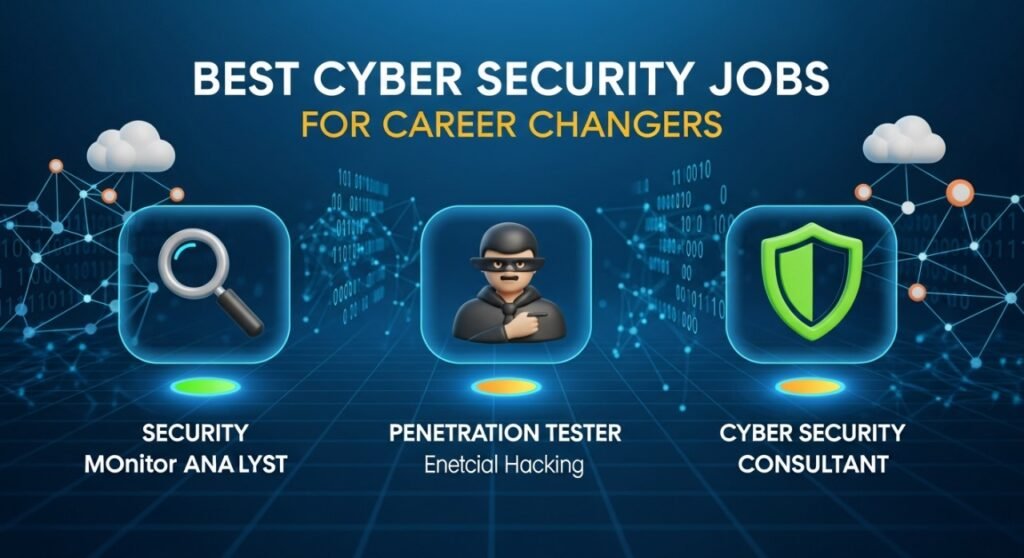
Cyber security jobs has rapidly emerged as one of the most in-demand fields in today’s job market. With the increasing frequency and sophistication of cyberattacks, the need for skilled professionals has skyrocketed. As a result, those seeking a new career can find cybersecurity jobs an attractive and rewarding option. Whether you’re transitioning from a completely different industry or already have a technical background, there are plenty of opportunities available.
The demand for cybersecurity experts isn’t going away any time soon. In fact, it’s expected to increase for the foreseeable future. According to recent reports, cybersecurity jobs are projected to grow by 31% from 2019 to 2029, a rate much faster than the average for most professions. If you’re considering making a career change, cybersecurity might be your best bet. This article will guide you through the top cyber security jobs for career changers and help you understand the skills required to break into this field.
Why Cyber Security is a Lucrative Career Path
The world is becoming more connected through digital technologies, and businesses are relying on the internet to conduct nearly all of their operations. As this digital landscape expands, so do the threats that accompany it. Cyberattacks are a growing concern, and businesses need experts who can safeguard their networks and systems. This has led to a significant demand for cybersecurity professionals.
A career in cybersecurity offers many benefits, such as high job security, an attractive salary, and growth opportunities. For instance, the average salary for a cybersecurity professional in the United States is around $100,000 per year, with some positions reaching up to $150,000 or more. Moreover, as the field expands, there are job opportunities in a wide range of industries, including finance, healthcare, and government.
For those making a career switch, cybersecurity offers a smooth transition, especially with the growing number of online resources and certifications available to prepare you for the industry. Whether you’re interested in technical roles, like a penetration tester, or strategic positions, such as a cybersecurity consultant, there are many paths you can take in this exciting field.
The Top Cyber Security Jobs for Career Changers
When it comes to cyber security jobs, there are various positions available, each with its own set of responsibilities and skill requirements. Here’s a list of some of the top cyber security jobs for career changers that can serve as both entry points and long-term career goals:
1. Security Analyst
Security analysts are at the heart of cybersecurity operations. They monitor and protect an organization’s computer systems and networks from potential threats. They use a variety of tools to detect vulnerabilities, respond to incidents, and improve overall security protocols. For those transitioning into cybersecurity, this role is often a great starting point.
Key Responsibilities:
- Monitor network security and identify vulnerabilities
- Respond to cybersecurity incidents and mitigate potential threats
- Regularly assess system vulnerabilities and deploy necessary updates
- Collaborate with other departments to ensure compliance with cybersecurity best practices
Skills Required:
- Knowledge of firewalls and antivirus software
- Experience with network monitoring tools
- Risk assessment and vulnerability analysis skills
2. Penetration Tester (Ethical Hacker)
If you are interested in ethical hacking, the role of a penetration tester might be the perfect fit. Pen testers simulate attacks on networks and systems to identify weaknesses before malicious hackers can exploit them. It’s a highly dynamic and challenging role that requires a mix of technical expertise and creativity.
Key Responsibilities:
- Conduct simulated cyberattacks to assess system vulnerabilities
- Write detailed reports on findings and propose actionable solutions
- Work with other cybersecurity professionals to remediate vulnerabilities
Skills Required:
- Knowledge of penetration testing tools (e.g., Metasploit, Burp Suite)
- Familiarity with various operating systems (e.g., Linux, Windows)
- Strong programming skills (e.g., Python, C++)
3. Cyber Security Consultant
As a cybersecurity consultant, you’ll help organizations strengthen their security policies and frameworks. Consultants work with companies to identify risks, suggest improvements, and guide them through the implementation of security solutions.
Key Responsibilities:
- Assess the organization’s cybersecurity infrastructure
- Advise on best practices for data protection and threat mitigation
- Ensure compliance with industry standards and regulations
Skills Required:
- Deep knowledge of cybersecurity protocols and regulatory standards
- Strong communication skills to explain complex concepts to non-technical stakeholders
- Project management skills to oversee security initiatives
Comparison of Cyber Security Roles
| Job Title | Key Responsibilities | Skills Required | Average Salary (USD) |
|---|---|---|---|
| Security Analyst | Monitor systems, detect vulnerabilities, respond to incidents | Network security, risk management, compliance | $70,000–$90,000 |
| Penetration Tester | Simulate cyberattacks, find vulnerabilities, report findings | Ethical hacking, programming, network protocols | $80,000–$120,000 |
| Cyber Security Consultant | Advise organizations, implement security policies | Risk management, communication, regulations | $95,000–$150,000 |
Entry-Level Cyber Security Jobs for Career Changers
Breaking into the cybersecurity field can seem intimidating, especially if you don’t have a technical background. However, several entry-level cybersecurity jobs can serve as an excellent entry point for career changers.
4. IT Support Specialist
As an IT support specialist, you’ll help maintain an organisation’s IT infrastructure, ensuring that computers, networks, and other systems function correctly. While this position is more general, it provides a solid foundation for transitioning into more specialized cybersecurity roles in the future.
Key Responsibilities:
- Troubleshoot network and system issues
- Assist in the setup and configuration of IT systems
- Monitor systems for security threats
Skills Required:
- Basic knowledge of computer systems and networks
- Experience with network administration
- Understanding of IT security practices
5. Network Administrator
A network administrator ensures that an organization’s network infrastructure is secure and functioning. This role is a perfect entry point into cybersecurity, offering hands-on experience with firewalls, VPNs, and other security tools.
Key Responsibilities:
- Configure and manage routers, switches, and firewalls
- Monitor network traffic for unusual activity
- Perform regular security checks and ensure compliance with policies
Skills Required:
- Knowledge of network protocols and network security
- Experience with firewalls, VPNs, and intrusion detection systems
- Problem-solving skills and attention to detail
Building the Skills to Transition Into Cyber Security
For career changers, the first step toward entering cybersecurity is to acquire the necessary skills. Fortunately, many training programs and certifications can help you transition into the field quickly.
6. Cyber Security Certifications for Career Changers
Certifications are a great way to validate your skills and make yourself more marketable to potential employers. Below are some of the top cybersecurity certifications for career changers:
- CompTIA Security+: A beginner-level certification that covers basic cybersecurity concepts.
- Certified Information Systems Security Professional (CISSP): An advanced certification for experienced professionals.
- Certified Ethical Hacker (CEH): Ideal for those interested in penetration testing and ethical hacking.
Key Cyber Security Certifications
| Certification | Target Audience | Skills Covered | Cost |
|---|---|---|---|
| CompTIA Security+ | Beginners | Basic security principles, network security | $350 |
| CISSP | Experienced professionals | Advanced security, risk management | $699 |
| Certified Ethical Hacker (CEH) | Aspiring ethical hackers | Penetration testing, ethical hacking | $1,199 |
Networking in Cyber Security
Networking plays a critical role in landing a cybersecurity job. By connecting with professionals in the field, you can open up opportunities for mentorship, job leads, and career advice.
7. How Networking Helps Your Cyber Security Career
Networking within the cybersecurity industry helps career changers in several ways:
- Job leads: Many opportunities are shared within professional networks before they are posted publicly.
- Mentorship: Mentors can provide guidance, share best practices, and help you navigate the industry.
- Industry trends: Networking enables you to stay up to date on the latest cybersecurity trends and technologies.
How to Apply for Cyber Security Jobs Effectively
When applying for cybersecurity positions, ensure your resume and cover letter highlight your skills, certifications, and relevant experience. Tailor each application to the specific role and emphasize your passion for cybersecurity.
8. Tips for Crafting a Winning Resume
- Highlight transferable skills from previous jobs (e.g., problem-solving, critical thinking)
- List cyber security certifications and training programs you’ve completed
- Use keywords from the job description to improve your chances with applicant tracking systems (ATS)
Building Your New Professional Identity
Your resume and online presence must reflect your new direction. They should bridge your past expertise with future goals.
Crafting a Transition Resume
Lead with a powerful summary. Frame your career change as a strategic asset. Use a hybrid or functional resume format. Highlight skills over chronological job history. Create a “Cyber Security Projects” section. Include your home lab, CTF competitions, and relevant coursework. Quantify achievements from past roles using security-friendly terms. For example, “Reduced risk by implementing new procedural controls.”
Effective Networking Strategies
Connect with cybersecurity professionals online. Engage with their content thoughtfully. Attend local meetups or virtual conferences, such as BSides. Ask specific questions about their career path. Informational interviews are invaluable. Prepare questions that show your research. A strong network often learns of job openings first. The community at www.careersfame.com can provide further support.
Common Obstacles and How to Overcome Them
Anticipate challenges during your career change. Preparation minimizes their impact on your progress.
Imposter syndrome affects many career changers. Combat it by documenting your learned skills. A lack of direct experience is a frequent hurdle. Counter it with a robust portfolio of personal projects. The technical jargon can feel overwhelming. Create a personal glossary and study terms daily. Employers may not see your relevance. Use your cover letter to tell a compelling story of transition.
Conclusion
The best cyber security jobs for career changers today are accessible. Your journey requires focused effort and strategic planning. Leverage the soft skills from your previous profession. Acquire foundational technical knowledge through certification. Build practical experience in your own home lab. Target roles that value your unique background. The cybersecurity field needs diverse thinkers. Your non-linear path is an advantage. Start building your foundational knowledge this week. The industry needs your perspective and drive.
FAQs
What are the best entry-level cybersecurity jobs for career changers?
Answer: Entry-level roles like Security Analyst, IT Support Specialist, or Network Administrator are ideal for those transitioning into cybersecurity.
How long does it take to transition into a cyber security job?
Answer: It can take anywhere from 6 months to 2 years, depending on your background and the certifications you obtain.
Do I need a technical background to get into cybersecurity?
Answer: While a technical background helps, it’s not required. Many entry-level roles provide the experience needed to advance in cybersecurity.
What skills are needed for a cybersecurity career?
Answer: Skills like network security, ethical hacking, risk management, and knowledge of cybersecurity tools are essential for a successful career.
How much can I expect to earn in a cyber security job?
Answer: The average salary for cybersecurity professionals ranges from $70,000 to $150,000, depending on the role and experience level.