When it comes to your career, every decision matters. One wrong move, no matter how small it may seem, can lead to long-lasting consequences. Many professionals, regardless of their experience, have made mistakes along the way that have slowed their career growth or even led to setbacks. The key to avoiding these mistakes lies in understanding common pitfalls and making better choices proactively.
This blog explores the top career mistakes that you must avoid to ensure a successful and fulfilling career. By identifying these mistakes and learning how to steer clear of them, you can navigate your career path with confidence. Let’s dive in and examine the most critical career mistakes to avoid.
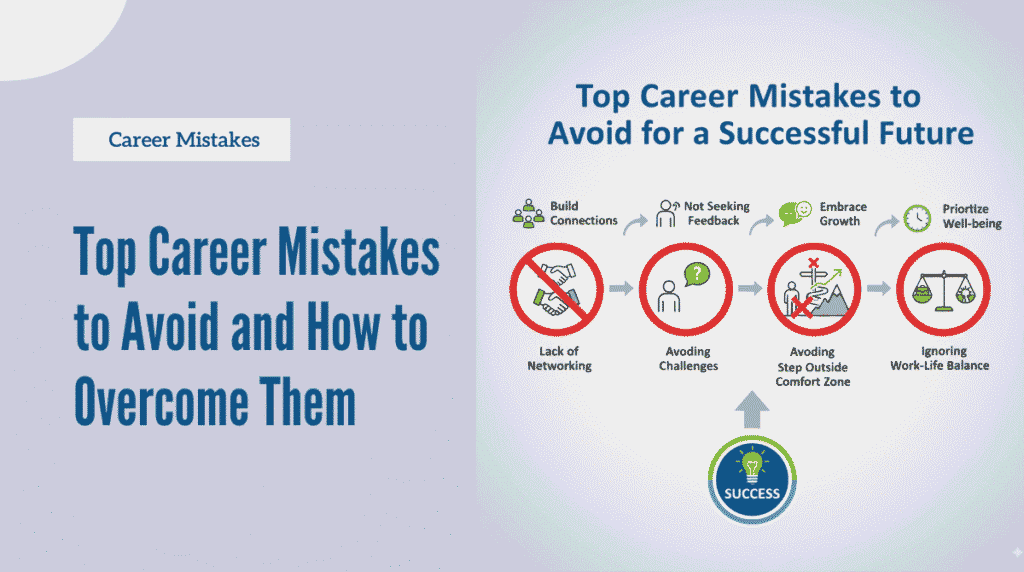
Top Career Mistakes to Avoid and How to Overcome Them
The road to a successful career isn’t always straightforward. Along the way, there are many temptations to make shortcuts or fall into bad habits. However, steering clear of these mistakes is crucial to long-term success.
1. Neglecting Networking Opportunities
Many professionals believe that simply doing their job well is enough to advance in their careers. However, networking plays a pivotal role in career growth. Failing to network and build relationships can limit your opportunities and make it harder to navigate your career successfully.
How to Avoid This Mistake
- Attend industry events, such as conferences, webinars, and networking gatherings, to connect with professionals in your field.
- Leverage LinkedIn: Use LinkedIn to connect with colleagues, potential clients, and industry leaders. Ensure your profile is up-to-date and accurately reflects your skills and experience.
- Seek Out Mentors: A mentor can offer invaluable advice and introduce you to key people in your industry.
Effective networking creates opportunities that you might not find otherwise. It’s not just about getting a job, it’s about staying informed, sharing knowledge, and collaborating on projects that can advance your career.
2. Settling for a Job That Doesn’t Align with Your Passion
One of the most common career mistakes is settling into a job just for the paycheck. While financial stability is essential, a job that doesn’t align with your passions can lead to burnout, dissatisfaction, and a lack of motivation. When you’re not excited about your work, it becomes a chore rather than a fulfilling career.
How to Avoid This Mistake
- Assess Your Interests: Take time to reflect on what truly excites you about your work. If you can’t find passion in your current job, consider pursuing another role within the same industry or even switching to a different one.
- Explore Your Options: Before making a decision, research various industries and job roles to find a better match for your skills and interests.
- Long-Term Goals Over Immediate Compensation: Although salary is a factor, it’s essential to prioritize long-term satisfaction over short-term monetary gain.
Choosing a career path that aligns with your passions will help you stay motivated and engaged, ultimately leading to a more successful career.
3. Failing to Seek Feedback or Mentorship
Without regular feedback, it’s challenging to determine whether you’re progressing in your career. Many professionals fail to seek input, either because they are afraid of criticism or simply don’t think it’s necessary. However, feedback is essential for growth, just like mentorship, which can guide you through challenges and provide advice on overcoming obstacles.
How to Avoid This Mistake
- Actively Seek Feedback: Regularly solicit feedback from your peers, managers, and subordinates to identify areas for improvement and growth.
- Find a Mentor: A mentor who’s experienced in your field can offer guidance, help you set career goals, and steer you through difficult situations.
- Be Open to Constructive Criticism: Instead of avoiding criticism, see it as an opportunity to improve your skills.
By regularly seeking feedback and working with a mentor, you can ensure continuous improvement and avoid repeating the same mistakes.
Key Career Mistakes vs. Effective Strategies
| Career Mistake | Effective Strategy | Outcome |
|---|---|---|
| Avoiding Networking Opportunities | Actively attend industry events and build connections | Expands your professional network and opens doors to opportunities |
| Not Pursuing Passion-Driven Work | Align career choices with your interests and values | Increased job satisfaction and motivation to excel |
| Lack of Skill Development | Continuously learn new skills and seek certifications | Keeps you competitive and adaptable in a fast-changing market |
| Playing It Safe | Take on challenging projects that push your boundaries | Growth opportunities and career advancement |
| Focusing Only on Immediate Rewards | Set long-term goals and prioritize career development | Long-term career fulfillment and success |
4. Ignoring Professional Development and Skill Building
In today’s fast-paced job market, it’s essential to learn and grow continually. Many professionals make the mistake of thinking that once they’ve landed a job, they can stop improving their skills. However, the failure to continue learning can quickly lead to obsolescence, especially with the rapid development of new technologies and processes.
How to Avoid This Mistake
- Invest in Learning: Regularly take courses, attend workshops, and stay updated on industry trends to keep your skills sharp.
- Stay Curious: Don’t wait for your company to invest in your professional development—take the initiative to learn and grow.
- Consider Certifications: Earning industry-recognized certifications can give you an edge over others in your field.
Building new skills will not only keep you competitive but will also increase your value within your organization and in the job market.
5. Avoiding Risk and Playing It Safe
While it’s essential to make informed decisions, taking no risks at all can be just as detrimental to your career. Many professionals avoid stepping outside their comfort zone, which can result in stagnation. If you’re constantly playing it safe, you might miss out on opportunities that could propel you to the next level.
How to Avoid This Mistake
- Take Calculated Risks: Pursue challenging projects that will allow you to grow and showcase your abilities.
- Step Outside Your Comfort Zone: Volunteer for assignments that push your limits and require new skills.
- See Risk as Growth: Understand that growth often comes with a level of discomfort. Embrace it as part of the journey.
Taking strategic risks can lead to breakthrough moments in your career. Sometimes, the most significant opportunities come from stepping into the unknown.
6. Focusing Only on Immediate Rewards
Many professionals focus too much on immediate rewards, such as getting promoted or receiving a salary increase. While these things are essential, they should not be the only driving force behind your career decisions. Focusing solely on short-term gains can prevent you from making long-term decisions that are ultimately more beneficial.
How to Avoid This Mistake
- Think Long-Term: Consider how your current job or role fits into your overall career goals.
- Prioritize Experience: Sometimes, gaining valuable experience or learning new skills may not immediately result in a promotion, but it’s crucial for long-term career success.
- Evaluate Impact Over Reward: Focus on how your work contributes to your personal and professional growth, rather than just on promotions or raises.
By focusing on the long-term benefits of your career decisions, you’ll find greater fulfillment and growth, which will ultimately lead to increased success in the future.
The Importance of Career Planning
Without a clear career roadmap, it’s easy to fall into the trap of making decisions based on immediate circumstances or pressures. A lack of planning can result in missed opportunities or getting stuck in a role that doesn’t align with your goals.
7. Not Setting Clear Career Goals
Lacking clear career goals is one of the most detrimental mistakes one can make. Without specific targets to work towards, it’s easy to lose focus and waste time in dead-end jobs.
How to Avoid This Mistake
- Set Specific Goals: Clearly define what you want to achieve in the short-term and long-term.
- Break Goals into Actionable Steps: Once you have your career goals, break them down into manageable steps to keep moving forward.
- Review and Adjust Goals Regularly: Reassess your goals every few months to ensure they remain aligned with your career aspirations.
Clear goals will provide a sense of direction and motivation, making it easier to track progress and stay on course.
8. Not Adapting to Change
The professional world is constantly evolving, and so should you. Being resistant to change can cause you to fall behind as industries innovate and grow. The ability to adapt to new technologies, work environments, and industry shifts is a crucial skill for long-term success.
How to Avoid This Mistake
- Stay Updated: Continuously learn about industry trends, tools, and technologies.
- Be Flexible: Embrace changes in the workplace and be open to new ways of doing things.
- Proactively Adapt: Seek out new skills and certifications that keep you competitive and adaptable.
Adapting to change ensures that you remain relevant in your field and are better positioned to capitalize on new opportunities.
Career Mistakes Table: Top Career Errors and Solutions
| Career Mistake | How to Avoid It | Key Takeaways |
|---|---|---|
| Not Taking Risks | Volunteer for challenging projects and roles | Taking risks can open up major opportunities. |
| Settling for Short-Term Gains | Focus on long-term growth and satisfaction | Long-term success requires strategic planning. |
| Ignoring Feedback and Mentorship | Ask for feedback and seek a mentor regularly | Constructive criticism fuels growth. |
| Not Keeping Skills Up-to-Date | Continuously invest in learning and development | Constant learning keeps you competitive in the job market. |
| Overlooking Career Goals | Set specific and measurable goals for growth | Clear goals guide you on your career path. |
Conclusion: Staying Ahead of Career Mistakes
Avoiding career mistakes isn’t just about avoiding failure; it’s about setting yourself up for success. By making informed, proactive decisions and seeking continuous growth, you can overcome common pitfalls and navigate your career path more effectively. Whether it’s networking, setting clear goals, or developing new skills, each of these actions will contribute to your long-term career success.
The key to success lies in self-awareness and constant improvement. By avoiding these top career mistakes, you’ll be well on your way to achieving your professional dreams.
FAQ
How can I identify if I’m making a career mistake?
You can identify career mistakes by evaluating if your decisions are consistently aligned with your long-term goals, personal values, and satisfaction. If you find yourself feeling stuck, unhappy, or stagnant, it might be time to reassess your choices.
Is it too late to change my career path?
It’s never too late to change your career path. Many professionals successfully pivot their careers, especially if they focus on acquiring new skills, networking, and finding a role that aligns with their passions.
How do I stay motivated when facing career challenges?
To stay motivated during career challenges, set small, achievable goals. Celebrate wins along the way and seek support from mentors, colleagues, or friends who can help guide you through difficult times.
Should I prioritize a high salary or job satisfaction?
Job satisfaction should be prioritized over a high salary in the long run. While salary is substantial, staying engaged and fulfilled in your role will lead to greater success and long-term career growth.
What are the benefits of having a mentor in my career?
A mentor can provide guidance, feedback, and insights based on their experience. They can help you avoid mistakes, navigate challenges, and grow professionally, ultimately accelerating your career development.