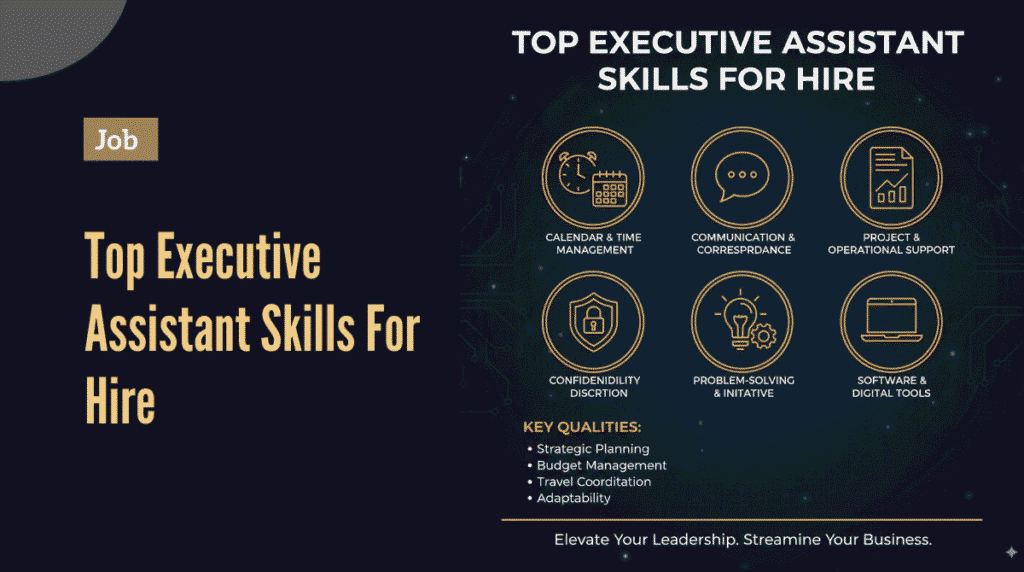
An Executive Assistant is a key player in ensuring the smooth operation of any business. The role involves managing complex schedules, acting as a liaison between executives and staff, and handling a range of administrative tasks. As businesses grow and evolve, the demand for skilled executive assistants continues to rise, especially those equipped with specialised skills that make them indispensable to senior leaders.
For employers looking to hire an Executive Assistant, it’s essential to understand the skills and competencies that define the role’s success. Whether you are hiring a full-time assistant, a part-time contractor, or a virtual assistant, knowing the most in-demand skills will ensure you find the right candidate for the job. This article will outline the top Executive Assistant skills that employers look for when hiring, along with valuable insights into the role’s growing importance across industries.
1. Organisational Skills: The Backbone of the Executive Assistant Role
An Executive Assistant must be highly organised. This skill is essential for managing calendars, coordinating meetings, and handling multiple tasks simultaneously. The ability to prioritise tasks and keep everything in order ensures that the Executive’s day runs smoothly.
Why Organisational Skills Matter
- Efficiency: An organised assistant can manage the flow of work, ensuring deadlines are met and tasks are completed on time.
- Time Management: Balancing multiple appointments, emails, and administrative duties is essential for supporting executives efficiently.
Key Organisational Skills for Executive Assistants
- Task Management: Proficiency in tools like Asana, Trello, or Monday.com to track and manage daily tasks.
- File Management: The ability to keep documents and files well-organised, ensuring quick retrieval when needed.
- Scheduling: Mastering calendar management, including setting up meetings and ensuring no overlaps in an executive’s schedule.
2. Communication Skills: Facilitating Smooth Interactions
Strong communication skills are a must for any Executive Assistant. This role often involves communicating on behalf of the Executive, whether through emails, phone calls, or in-person meetings. Clear and effective communication can help in building strong relationships with both internal teams and external clients or partners.
Why Communication Skills Are Essential
- Clear Messaging: An executive assistant often acts as a bridge between executives and others. Miscommunication can cause delays and misunderstandings.
- Professionalism: Polished communication reflects positively on the company and enhances the Executive’s reputation.
Key Communication Skills for Executive Assistants
- Verbal and Written Communication: Clear, concise, and professional communication is essential, whether it’s for emails, reports, or phone calls.
- Active Listening: Listening attentively to understand requests and needs ensures accurate communication.
- Conflict Resolution: Being able to mediate and handle disputes calmly and professionally is an essential skill for executive assistants.
3. Tech Savvy: Mastering Modern Tools
In today’s fast-paced work environment, an Executive Assistant must be comfortable with a wide range of software tools. From scheduling platforms to document management systems, having a tech-savvy assistant can improve efficiency and effectiveness.
Why Tech Skills Matter
- Streamlined Processes: Automation and technology can simplify administrative tasks, saving time and reducing errors.
- Remote Work: With many positions now being remote, proficiency with digital communication and collaboration tools is crucial.
Top Tech Tools for Executive Assistants
- Microsoft Office Suite: Word, Excel, PowerPoint, and Outlook are essential tools for document creation and management.
- Google Workspace: Google Docs, Sheets, and Calendar are essential for collaboration and managing shared documents.
- Video Conferencing: Familiarity with platforms like Zoom, Google Meet, and Microsoft Teams ensures smooth remote meetings.
- Project Management Software: Tools like Slack, Asana, and Basecamp help organise tasks and facilitate communication within teams.
4. Problem-Solving Abilities: Staying Calm Under Pressure
An Executive Assistant often faces unexpected challenges that require quick thinking and problem-solving. Whether it’s last-minute changes to a schedule or handling urgent requests, the ability to stay calm and find solutions is crucial.
Why Problem-Solving is Important
- Adaptability: Being able to adjust quickly to changes and handle unforeseen situations efficiently is a key quality in an executive assistant.
- Independent Decision Making: In some cases, an executive assistant may need to make decisions on behalf of the Executive in their absence.
Problem-Solving Techniques for Executive Assistants
- Creative Solutions: Thinking outside the box to address challenges and streamline processes.
- Prioritisation: Identifying urgent issues and managing them before they become bigger problems.
- Calm Under Pressure: Maintaining composure while dealing with multiple conflicting priorities.
5. Confidentiality and Discretion: Handling Sensitive Information
Executive assistants frequently handle sensitive company information, including financial data, confidential contracts, and personal details about the executives they support. Maintaining confidentiality and exercising discretion are paramount to the role’s success.
Why Confidentiality is Key
- Trust: Executives must trust that their assistant will handle sensitive matters with the utmost care.
- Company Security: Ensuring that confidential information remains secure helps protect the company from potential risks.
Maintaining Confidentiality in the Executive Assistant Role
- Non-Disclosure Agreements (NDAs): Signing NDAs ensures both parties understand the importance of confidentiality.
- Secure Communication: Using encrypted emails and secure file-sharing platforms to handle sensitive information.
- Discreetness in Handling Information: Knowing when to share information and when to keep it confidential.
6. Multitasking: Juggling Multiple Responsibilities
Multitasking is an essential skill for Executive Assistants, as they often need to manage a wide variety of tasks simultaneously. Whether it’s managing schedules, answering calls, or coordinating meetings, being able to handle multiple tasks efficiently is a significant part of the role.
Why Multitasking is Necessary
- Time Management: Executives rely on their assistants to keep things moving efficiently, even when handling several tasks at once.
- Efficiency: Multitasking ensures that no task is overlooked and that the Executive’s time is optimised.
How to Excel at Multitasking
- Task Prioritisation: Recognising which tasks need immediate attention and which can be postponed.
- Using Tools for Efficiency: Leverage tools like calendar apps, project management software, and communication platforms to streamline work.
- Staying Organised: Keeping track of tasks with checklists or digital task managers helps avoid missing important details.
Top Executive Assistant Skills and Their Importance
| Skill | Importance |
|---|---|
| Organizational Skills | Essential for scheduling, task management, and overall business efficiency. |
| Communication Skills | Crucial for clear and effective communication between executives and teams. |
| Tech Savvy | Helps streamline tasks, manage virtual meetings, and improve overall productivity. |
| Problem-Solving | Required for handling unexpected issues and ensuring smooth operations. |
| Confidentiality | Maintains the integrity of company data and fosters trust with executives. |
7. Attention to Detail: Ensuring Accuracy
An Executive Assistant must possess a keen eye for detail. Whether it’s checking the Accuracy of reports, scheduling meetings, or proofreading communications, attention to detail ensures that nothing is overlooked.
Why Attention to Detail is Crucial
- Avoiding Mistakes: Small errors can have significant consequences, so paying attention to every detail is essential in the assistant role.
- Professionalism: Ensures that all communications and work are polished and accurate.
How to Improve Attention to Detail
- Proofreading: Always double-check written materials for spelling and grammatical errors.
- Double-Check Schedules: Ensure that all appointments are correctly scheduled and that there are no conflicts.
- Document Management: Review documents for Accuracy and completeness before submitting them.
Tools for Enhancing Executive Assistant Skills
| Tool | Purpose |
|---|---|
| Microsoft Outlook | Email management and calendar scheduling |
| Google Drive | Document sharing and collaboration with teams |
| Trello | Project and task management |
| Zoom | Virtual meetings and video conferencing |
| Slack | Team communication and collaboration |
Conclusion
Hiring an exceptional Executive Assistant requires identifying a specific skill combination. The modern role demands far more than administrative competence. It requires strategic thinking, technological fluency, and emotional intelligence. The right EA becomes an indispensable partner to organisational leadership.
They amplify executive effectiveness and organisational productivity. Prioritising these skills during recruitment delivers a significant return on investment. Organisations gain a professional who manages complexity with grace and efficiency. The investment in finding the right candidate pays dividends through improved executive performance. A skilled Executive Assistant truly serves as the backbone of effective leadership.
👉 Looking to hire the right talent? Browse our Job Opportunities to connect with professionals who fit your business needs.
FAQs
What are the most essential skills for an Executive Assistant?
The most important skills include organisational skills, communication, problem-solving abilities, tech proficiency, and confidentiality. These help in managing daily tasks, communications, and ensuring smooth business operations.
How can I improve my multitasking abilities as an Executive Assistant?
You can improve your multitasking abilities by prioritising tasks, using digital tools for efficiency, and staying organised with task lists and calendars.
Are Executive Assistants required to have tech skills?
Yes, Executive Assistants are expected to be proficient in various digital tools such as Microsoft Office, project management software, and communication platforms like Zoom and Slack.
What’s the average salary for an Executive Assistant?
The average salary for an Executive Assistant varies by location and experience, but it typically ranges from $50,000 to $80,000 annually.
Can an Executive Assistant work remotely?
Yes, many Executive Assistant roles, especially those in tech or virtual assistant positions, allow remote work options, providing flexibility in how and where tasks are completed.