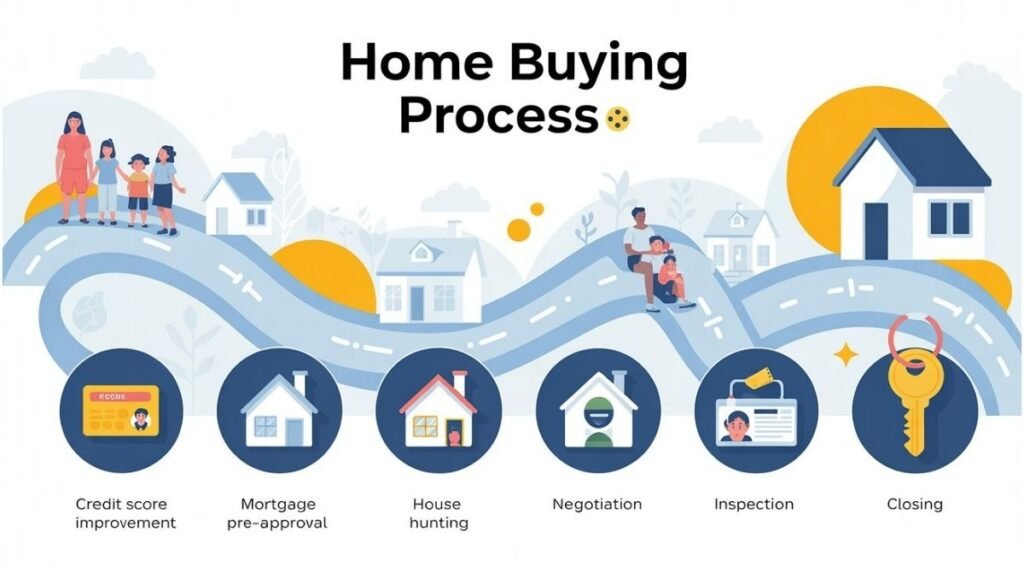
Home buyers face unique challenges in today’s competitive real estate market. Proper preparation and strategic planning make the home-buying process significantly smoother. This comprehensive guide covers essential strategies for first-time home buyers seeking success. We focus on practical steps and common pitfalls that new purchasers encounter. Understanding the complete journey from preparation to closing day is crucial for positive outcomes.
The mortgage process involves multiple important stages that require specific knowledge and actions. Financial readiness must come before property searching, and understanding various loan options prevents future stress. Our approach emphasizes sustainable home ownership through proper planning and professional guidance. The current housing market conditions make strategic preparation more valuable than ever for achieving home ownership goals.
Financial Preparation Fundamentals for Home Buyers
Credit Score Optimization Strategies
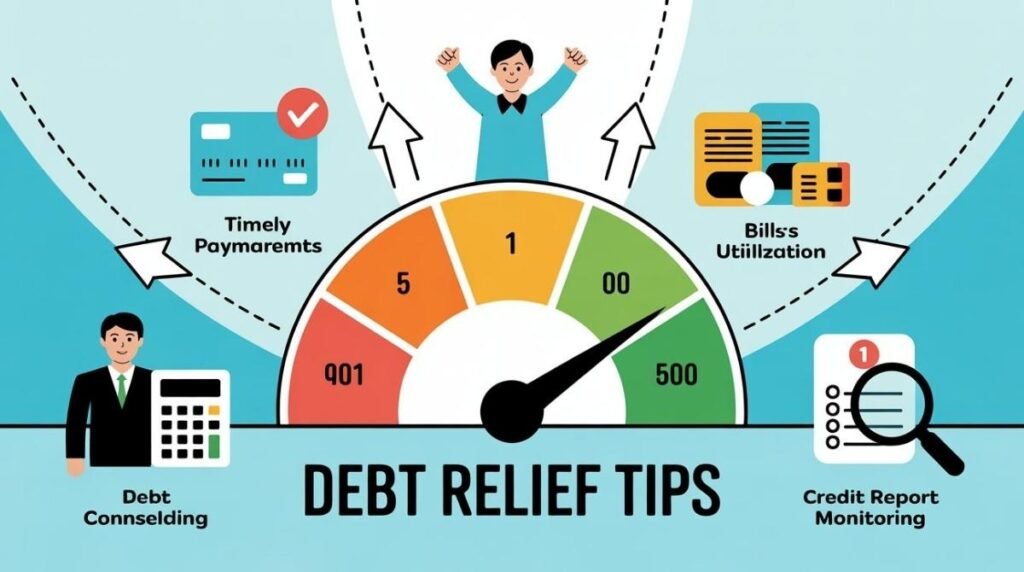
Home buyers must review their credit reports several months before beginning their search. Credit scores significantly impact mortgage rates and approval chances, with higher scores securing better loan terms. Obtain reports from all three major bureaus and dispute any errors immediately. The debt-to-income ratio is another critical factor that lenders examine closely when evaluating mortgage applications.
- Check scores 6-12 months before buying
- Maintain credit utilization below 30%
- Avoid new credit applications before mortgage approval
- Keep old accounts open for history length
- Pay all bills consistently on time
Down Payment Accumulation Methods
Saving for a down payment requires discipline and strategic planning. Many first-time home buyer programs help with down payment requirements. Some government-backed loans require only 3-5% down, while conventional loans typically need 3-20% depending on the program. Down payment assistance programs and grants exist at the state and local levels for qualified buyers.
Traditional savings methods work effectively when started early:
- Automatic transfers to dedicated savings accounts
- Reduce discretionary spending temporarily
- Consider secondary income sources
- Explore employer assistance programs
- Research state housing finance agency programs
Mortgage Pre-approval Advantages
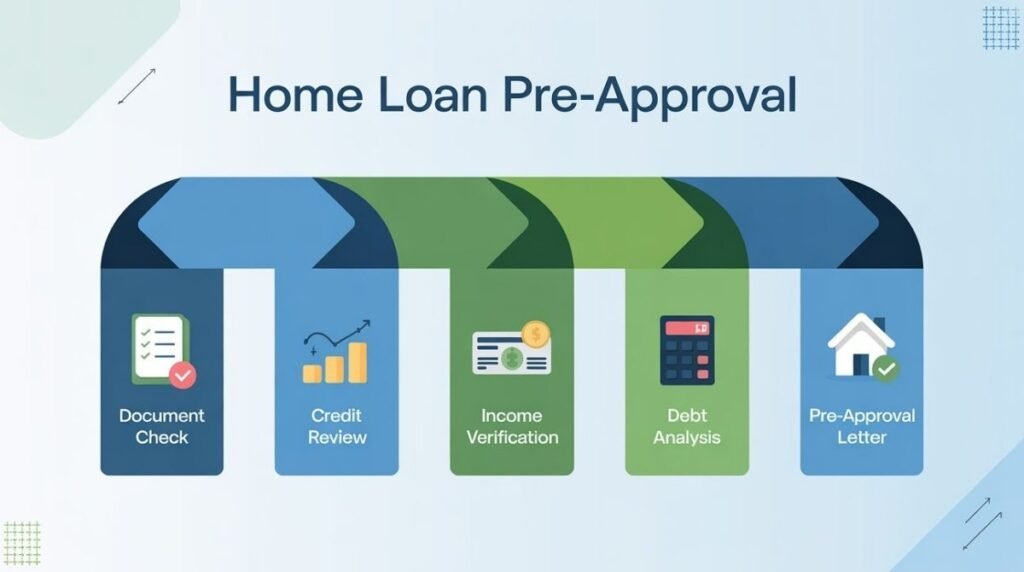
The pre-approval process provides crucial advantages for serious home buyers. This preliminary loan approval demonstrates purchasing capability to sellers and agents. Mortgage pre-approval typically involves a hard credit check and a documentation review. The resulting pre-approval letter strengthens offers in competitive markets and clarifies affordable price ranges.
Mortgage Options and Lender Selection
Documentation Requirements Overview
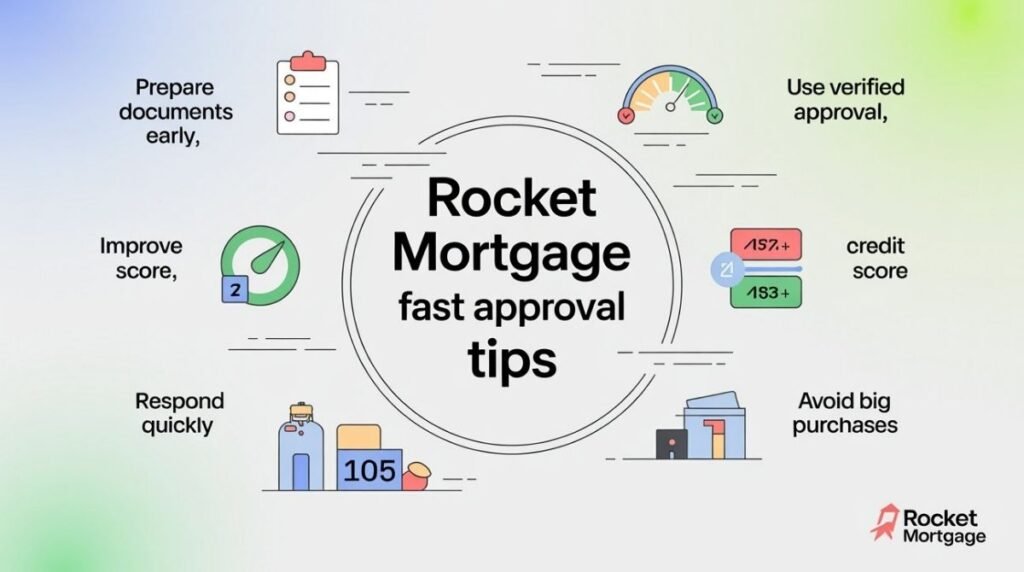
Lenders need comprehensive financial records before issuing a mortgage pre-approval. Prepare these documents before applying to streamline the process. Recent pay stubs and W-2 forms prove income stability and amount. Tax returns from the past two years verify income history and patterns. Bank statements show assets, reserves, and financial behavior.
Essential documentation checklist:
- Government-issued photo identification
- Social Security cards for all applicants
- Thirty days of pay stubs minimum
- Two years of complete tax returns
- Sixty days of bank account statements
- Investment account statements
- Retirement account summaries
[Learn about the latest lender programs and rates in our article on PenFed Mortgage Rates]
Comparing Mortgage Loan Products
Multiple mortgage options suit different financial situations and goals. Conventional loans offer flexibility for qualified buyers with strong credit. Government-backed loans like FHA, VA, and USDA have specific advantages for eligible borrowers. Compare interest rates, loan terms, and closing costs carefully across different programs.
Understanding Interest Rate Factors
Mortgage rates fluctuate based on market conditions and individual qualifications. Fixed-rate mortgages provide payment stability over the loan term. Adjustable-rate mortgages may offer lower initial rates but carry future uncertainty. Credit scores, down payment size, and loan term length all influence final interest rates.
Property Search and Evaluation Process
Location Selection Criteria Analysis
Neighborhood choice significantly affects lifestyle and long-term value. Consider commute times, school districts, and proximity to amenities carefully. Research future development plans and area appreciation history. Visit potential neighborhoods at different times and days to assess noise, traffic, and community atmosphere.
Essential location evaluation factors:
- Property tax rates and historical trends
- School district quality ratings and boundaries
- Commute distance to workplaces and transportation
- Future area development plans and zoning
- Neighborhood appreciation, history, and projections
- Crime statistics and safety records
Working Effectively With Real Estate Agents
Professional representation benefits first-time home buyers significantly. Experienced real estate agents understand local market conditions and pricing strategies. They negotiate effectively on your behalf, and their experience prevents common purchasing mistakes. Choose agents with specific first-time home buyer experience and local market expertise.
Agent selection criteria checklist:
- Experience with first-time home buyers
- Local market knowledge and track record
- Communication style and responsiveness
- References from past clients
- Professional certifications and training
- Knowledge of first-time buyer programs
Offer Preparation and Negotiation Strategies
Purchase Agreement Components Explained
Purchase agreements contain important legal protections and requirements. Understand all clauses before signing, especially contingency provisions. Inspection contingencies allow property evaluation and repair negotiations. Financing contingencies protect your earnest money deposit if loan approval fails. Appraisal contingencies address value discrepancies.
Key contract elements requiring attention:
- Purchase price and payment terms
- Contingency clauses and deadlines
- Personal property inclusions/exclusions
- Closing date and possession terms
- Repair responsibilities and limits
- Home warranty provisions
Home Inspection Importance and Process
Professional home inspections reveal hidden issues that affect value and safety. Never waive this contingency completely, even in competitive markets. Home buyers need objective property assessments from qualified inspectors. Home inspectors examine structural, mechanical, and safety systems thoroughly. Their reports inform negotiation positions and repair requests.
Critical inspection areas requiring attention:
- Roof condition and remaining life expectancy
- Electrical system safety and code compliance
- Plumbing functionality and leak detection
- HVAC system age and performance evaluation
- Foundation integrity and drainage issues
- Pest inspection and damage assessment
Closing Process Management Techniques
Final Walkthrough Protocol and Checklist
This last inspection occurs 24-48 hours before closing day. Verify all agreed repairs were completed satisfactorily and professionally. Check that the property condition remains unchanged since the contract date. Test all systems, appliances, and fixtures thoroughly. Ensure no new issues have appeared and that the property is clean and empty.
Comprehensive walkthrough checklist:
- Operate all lights, fans, and fixtures
- Test the HVAC system’s heating and cooling functions
- Run water in all bathrooms and check drainage
- Verify appliance functionality and settings
- Check the window and door operation
- Confirm repair completion and quality
Closing Cost Preparation and Understanding
Home buyers pay various closing costs at settlement, typically 2-5% of the purchase price. Some costs may be negotiable with sellers, while others are fixed lender requirements. Understand each fee’s purpose and necessity before closing day. Bring proper identification and certified funds as required by the title company.
Common closing costs explained:
- Loan origination fees (lender charges)
- Title insurance premiums (owner and lender policies)
- Prepaid property taxes and homeowners’ insurance
- Escrow account funding requirements
- Recording fees and transfer taxes
- Home warranty premiums (if purchased)
Post-Purchase Considerations and Adjustments
Home Maintenance Planning and Budgeting
Home ownership requires ongoing maintenance and unexpected repairs. Budget approximately 1-3% of home value annually for maintenance costs. Create a schedule for routine tasks and seasonal preparations. Learn basic repair skills for minor issues to save money. Establish relationships with reliable contractors before emergencies occur.
First-year maintenance priorities checklist:
- Change HVAC filters monthly or quarterly
- Test smoke detectors and carbon monoxide detectors
- Clean gutters and downspouts seasonally
- Service water heater and irrigation systems
- Inspect the roof and exterior after severe weather
- Program smart thermostats for efficiency
Financial Management After Purchase Completion
Monitor housing expenses closely during the initial adjustment period: track utility costs, maintenance spending, and property tax payments. Build emergency funds specifically for unexpected home repairs and systems replacements. Consider additional insurance coverage options like flood insurance, if needed. Review mortgage statements regularly for accuracy and payment history.
First-Time Home Buyer Program Opportunities
Government-Backed Loan Programs
FHA loans offer accessible options for buyers with lower credit scores or limited down payments. VA loans provide exceptional benefits for qualified military members and veterans. USDA loans support rural home purchases with zero down payment requirements. Each program has specific eligibility criteria and advantages worth exploring.
[For detailed information on FHA, VA, and USDA loan programs, visit the U.S. Department of Housing and Urban Development (HUD) website]
State and Local Assistance Programs
Many states offer down payment assistance through housing finance agencies. Local municipalities sometimes provide closing cost assistance for targeted neighborhoods. Employer-assisted housing programs help employees purchase homes near workplaces. Community development programs support specific demographic groups or areas.
Conclusion: Achieving Successful Home Ownership
First-time home buyers succeed through comprehensive preparation and strategic action. Each stage requires careful attention to details and deadlines. Professional guidance from real estate agents, lenders, and home inspectors prevents costly errors. Patience during the search and negotiation process pays significant dividends. Home ownership brings stability, equity building, and personal satisfaction when approached correctly.
The journey from renter to homeowner involves significant financial and emotional steps. Proper planning reduces stress and increases the likelihood of positive outcomes. Remember that the first home purchase represents a learning experience and a stepping stone. Future moves become easier with gained knowledge and established equity.
Frequently Asked Questions
What credit score do first-time home buyers need?
Scores above 620 qualify for most conventional loans, while FHA loans may accept scores down to 580. Higher scores secure better interest rates and terms. Government programs sometimes accept lower scores with compensating factors. Improving credit before applying helps significantly with affordability.
How much down payment do first-time buyers need?
Conventional loans require a minimum 3% down, while FHA loans require 3.5% down payment. VA and USDA loans offer zero down options for qualified buyers. Down payment assistance programs can reduce or eliminate out-of-pocket requirements for eligible purchasers.
Should first-time buyers use real estate agents?
Professional representation provides significant advantages in navigating complex transactions. Agents understand market conditions, pricing strategies, and negotiation techniques. Their services typically cost buyers nothing directly, as commissions come from seller proceeds. Choose agents with specific first-time buyer experience.
What are the biggest first-time buyer mistakes?
Overlooking additional homeownership costs beyond the mortgage payment causes budget problems. Skipping inspections creates financial risks from undiscovered issues. Maxing out budgets leaves no room for unexpected expenses. Rushing the process leads to poor decisions and buyer’s remorse.
How long does the home-buying process take?
The preparation phase typically takes 3-6 months for credit improvement and savings. Property search averages 4-12 weeks, depending on market conditions. The closing process usually requires 30-45 days from accepted offer to settlement. Competitive markets may accelerate timelines, while complex transactions can extend them.