IT technician skills are essential for those looking to excel in today’s fast-paced, technology-driven world. As businesses increasingly rely on advanced technology to improve productivity, the demand for skilled IT professionals has never been higher. Mastering the correct set of technical skills is crucial for those entering the workforce or seeking career advancement in the IT field. The tech industry continues to evolve rapidly, and technicians who are well-versed in the latest tools, technologies, and techniques are highly sought after.
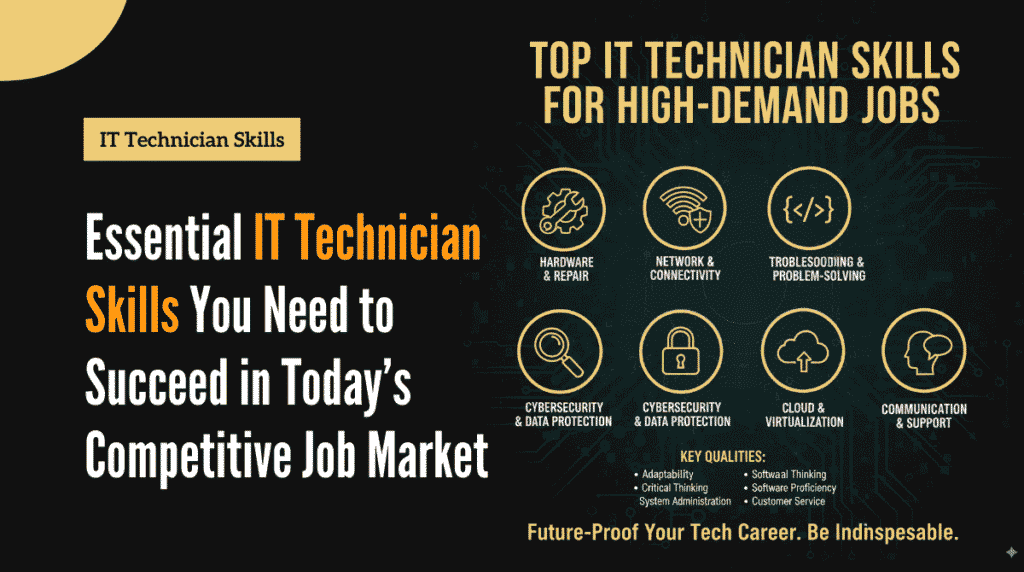
From managing network systems to supporting end users, IT technicians are integral to the smooth operation of technology within organisations. If you are planning to pursue a career as an IT technician or are looking to enhance your current skills, it is essential to know which technical abilities are currently in high demand. This article delves into the top IT technician skills for 2025, providing valuable insights into which expertise will make you more competitive in the job market.
1. Network Configuration and Management
As an IT technician, having a strong understanding of network configuration and management is one of the most crucial skills. Network systems are the backbone of modern businesses, and technicians must be able to set up, maintain, and troubleshoot these networks effectively.
Why Network Configuration is Essential
- Connectivity: Businesses rely heavily on their network systems to connect employees, clients, and customers. A well-managed network allows for seamless communication and data exchange.
- Security: Proper network management ensures that internal and external data is securely transmitted, protecting against cyber threats.
Key Network Configuration Skills
- LAN/WAN Setup: Understanding how to design and configure local area networks (LAN) and wide area networks (WAN) is a vital skill for any IT technician.
- Router and Switch Configuration: Familiarity with the setup and management of routers and switches ensures proper network connectivity and communication.
- Troubleshooting Network Issues: When network issues arise, the ability to quickly identify the problem and implement solutions is crucial to minimising downtime.
2. Cybersecurity Expertise
With the rise in cyber threats and data breaches, cybersecurity skills are among the most in-demand for IT technicians. Cybersecurity is essential for protecting sensitive data and maintaining the integrity of business systems.
Importance of Cybersecurity for IT Technicians
- Data Protection: Protecting customer and company data from unauthorized access and malicious attacks is a priority.
- Regulatory Compliance: Many industries require businesses to follow specific regulations to protect sensitive information. IT technicians help ensure companies are compliant with laws like GDPR or HIPAA.
Key Cybersecurity Skills for IT Technicians
- Firewalls and Antivirus Software: Setting up and maintaining firewalls and antivirus programs to protect against external threats.
- Penetration Testing: The ability to test systems for vulnerabilities before malicious hackers exploit them.
- Security Monitoring: Constantly monitoring systems for any potential security breaches and acting quickly to prevent them.
3. Cloud Computing Skills
Cloud computing has revolutionized how businesses store and manage their data. As companies increasingly migrate to the cloud for scalability, storage, and collaboration, IT technicians with expertise in cloud computing are in high demand.
Why Cloud Skills Are Essential
- Remote Work: Cloud computing allows employees to access their work from anywhere, making it a must-have skill as remote work continues to grow.
- Cost-Effectiveness: Cloud solutions often provide businesses with lower upfront costs, scalability, and flexibility in managing data.
Key Cloud Computing Skills
- Cloud Service Management: Expertise in managing cloud-based platforms like Amazon Web Services (AWS), Microsoft Azure, and Google Cloud is highly sought after.
- Cloud Security: Ensuring that cloud systems are secure and protected from breaches is critical.
- Cloud Migration: Assisting businesses in moving their data from on-premise systems to the cloud without disrupting operations.
4. IT Troubleshooting and Diagnostics
A strong ability to troubleshoot and diagnose technical issues is a must for any IT technician. Troubleshooting skills are vital because issues can arise unexpectedly, and resolving them quickly ensures minimal disruption to operations.
Why Troubleshooting Skills Are Essential
- Minimised Downtime: Quickly resolving technical issues ensures that systems run smoothly, keeping businesses productive.
- Client Satisfaction: Effective troubleshooting builds trust and credibility with both internal and external clients.
Key Troubleshooting Skills for IT Technicians
- Hardware Diagnostics: Being able to identify and fix problems with computers, servers, and networking equipment.
- Software Issue Resolution: Diagnosing issues with operating systems and applications and finding solutions quickly.
- System Monitoring: Using system monitoring tools to identify potential issues before they affect operations.
5. IT Support and Help Desk Skills
Providing IT support is one of the most common roles for technicians. IT support professionals ensure that employees have the tools and technical help they need to succeed.
Why IT Support Skills Are In-Demand
- User Interaction: IT support roles often involve direct interaction with end-users, solving their technical problems in real-time.
- Business Efficiency: IT support professionals ensure that employees can continue working without technical interruptions.
Key IT Support Skills
- Ticketing Systems: Managing service requests through ticketing software, ensuring that all issues are addressed promptly.
- Remote Support: Assisting with remote tools for users in various locations.
- Customer Service: Offering excellent customer service, including explaining technical concepts in simple terms.
6. Operating System Management
Proficiency in managing different operating systems (OS) is a key skill for IT technicians. Whether it’s Windows, macOS, or Linux, technicians must be adept at installing, configuring, and maintaining operating systems.
Why OS Management is Critical
- System Compatibility: Different businesses use different operating systems, and technicians need to be able to work with all of them.
- Security Updates: Keeping operating systems up to date ensures that systems are secure from vulnerabilities.
Key Skills in OS Management
- OS Installation and Configuration: Installing new operating systems and configuring them according to business needs.
- Security Maintenance: Managing built-in security features like firewalls, user access control, and encryption.
- System Optimisation: Ensuring that operating systems run smoothly by monitoring system resources and clearing unnecessary files.
7. Database Management and SQL
Understanding database management is crucial for IT technicians who deal with large amounts of data. Databases store essential business data, and technicians must know how to manage, protect, and retrieve this data.
Why Database Management Skills are Vital
- Data Integrity: Maintaining the accuracy and consistency of data within the database is a top priority.
- Efficiency: Proper database management ensures that data can be retrieved quickly when needed.
Key Database Management Skills
- SQL Proficiency: The ability to write SQL queries to retrieve and manipulate data.
- Database Backup and Recovery: Ensuring that databases are regularly backed up and can be restored in case of a disaster.
- Database Security: Protecting databases from unauthorized access and ensuring compliance with data protection regulations.
Comparison of Top IT Technician Skills for 2025
| Skill | Why It’s Important | Key Areas of Focus |
|---|---|---|
| Network Configuration | Ensures smooth communication and connectivity | Router/switch setup, troubleshooting network issues |
| Cybersecurity Expertise | Protects business data and systems from cyber threats | Firewalls, penetration testing, threat detection |
| Cloud Computing | Facilitates scalability and remote work | Cloud infrastructure management, cloud security |
| Troubleshooting & Support | Provides quick resolutions to technical problems | Hardware/software diagnostics, system monitoring |
| Operating System Mgmt | Manages and secures various operating systems | OS installation, updates, optimization |
8. IT Certifications
Certifications are one of the best ways to stand out as an IT technician. Many certifications validate your knowledge and demonstrate your competence in specialised areas of IT.
Top IT Certifications to Consider:
- CompTIA A+: A foundational certification for IT professionals, covering hardware and software troubleshooting.
- Cisco Certified Network Associate (CCNA): Focuses on networking and system management.
- Certified Information Systems Security Professional (CISSP): Specializes in cybersecurity practices and policies.
- Microsoft Certified Solutions Expert (MCSE): Focuses on Microsoft technologies and systems management.
Top IT Certifications for Career Growth
| Certification | Specialization | Salary Potential |
|---|---|---|
| CompTIA A+ | General IT troubleshooting and support | $55,000 – $65,000 |
| CCNA | Networking and system management | $70,000 – $90,000 |
| CISSP | Cybersecurity | $90,000 – $120,000 |
| MCSE | Microsoft solutions and system management | $80,000 – $110,000 |
Conclusion
To stay competitive in the tech industry, IT technicians must continually refine their skills and stay up-to-date with emerging technologies. With the demand for IT professionals growing rapidly, mastering the skills mentioned in this article will help position you for success in the workforce. Whether it’s mastering network management, ensuring cybersecurity, or gaining expertise in cloud computing, each of these skills will make you an invaluable asset to employers looking to streamline their operations.
Additionally, pursuing certifications in specialized areas like cybersecurity or cloud computing can set you apart from other candidates. With the tech industry continuing to expand, now is the perfect time to invest in these high-demand IT technician skills.
Looking for IT professionals or opportunities? Check out our IT Technician job listings to find skilled candidates or advance your IT career today.
FAQs
What are the top skills needed for an IT technician?
The top skills for an IT technician include network management, cybersecurity, cloud computing, troubleshooting, and operating system management. These skills are essential for maintaining the technology infrastructure of an organisation and ensuring the smooth operation of its systems.
Are certifications required for IT technicians?
While certifications are not strictly required, they are highly recommended. Certifications such as CompTIA A+, CCNA, and CISSP help validate your expertise and demonstrate to employers that you have the skills necessary to succeed in specialised areas. They can also improve your career prospects and salary potential.
How much can an IT technician make with these skills?
An IT technician’s salary can vary based on experience, location, and the specific skills they possess. With network management, cybersecurity, and cloud computing expertise, IT technicians can earn between $60,000 and $120,000 annually. Specialised roles or certifications can lead to higher-paying opportunities.
Which IT certifications are the most valuable?
Some of the most valuable IT certifications include CompTIA A+, which covers basic IT troubleshooting, CCNA for networking skills, CISSP for cybersecurity, and MCSE for expertise in Microsoft technologies. These certifications not only enhance your resume but also demonstrate your competence in critical areas of IT.
Can I work remotely as an IT technician?
Yes, many IT technician roles, especially in fields like cloud computing, cybersecurity, and IT support, offer remote work opportunities. As businesses increasingly adopt remote and hybrid work models, IT technicians can often work from home, providing technical support or managing cloud systems remotely.