Trade school programs have become an essential pathway for individuals looking to enter high-paying, skilled professions quickly. These programs are designed to provide hands-on, practical training that prepares students for successful careers in various industries. Unlike traditional four-year degrees, trade school programs offer focused education that is often completed in a shorter time frame, enabling students to enter the workforce faster and with valuable certifications.
The popularity of trade school programs continues to rise due to the growing demand for skilled labor in fields such as construction, healthcare, and technology. Trade schools offer a variety of options for students who want to pursue careers as HVAC technicians, electricians, welders, dental hygienists, and more. These fields not only provide job security but also offer excellent earning potential. As industries evolve and the need for specialized skills increases, trade school education remains one of the most reliable pathways for career success.
Evaluating the Best Trade School Programs
Selecting the right program requires careful consideration of several factors. The best trade school program aligns with your interests and career goals.
Program Accreditation is Essential
Always verify a trade school‘s accreditation status. Accreditation ensures the training meets industry quality standards. It is also crucial for qualifying for federal financial aid. Employers prefer graduates from accredited trade school programs.
Job Placement Rates and Employer Partnerships
Research the trade school‘s job placement rate. Strong programs have dedicated career services departments. They often have partnerships with local employers and unions. These relationships can lead directly to job opportunities after graduation.
Hands-On Training and Apprenticeship Opportunities
The best trade school programs offer extensive practical training. Look for schools with modern workshops and equipment. Apprenticeship programs are particularly valuable. They allow you to earn a wage while learning your trade from experienced professionals.
Total Cost and Financial Aid Options
Understand the total cost of the program. Compare tuition rates across different trade school options. Investigate all available financial aid options. This includes grants, scholarships, and loans. Some employers offer tuition reimbursement for relevant training.
1. Top Trade School Programs for Lucrative Careers
HVAC Technician
The HVAC industry has been thriving as residential, commercial, and industrial facilities all rely on climate control systems. As an HVAC technician, you will be responsible for installing, maintaining, and repairing heating, ventilation, and air conditioning systems. According to the U.S. Bureau of Labour Statistics, the median annual salary for HVAC technicians is approximately $58,000, with a job growth rate of 9% expected in the next decade.
Key Features:
- Accredited programs available nationwide
- Opportunities to work for leading companies such as Carrier, Trane, and Lennox
- Hands-on training that prepares students for real-world challenges
- High demand in both residential and commercial sectors
Plumbing
Plumbing is one of the most essential trades, with professionals needed to install and maintain water and sewage systems. As the world’s infrastructure continues to expand and evolve, the need for plumbers remains high. The median annual salary for plumbers is about $70,000, with strong job prospects and a steady demand for skilled professionals. The job market for plumbing is projected to grow by 6% over the next decade, ensuring ample career opportunities.
Key Features:
- Short-term training programs, typically lasting 1-2 years
- Excellent earning potential with opportunities to start your own business
- Work available in residential, commercial, and industrial sectors
- High job security with increasing demand for plumbing services
Electrical Technician
The electrical field is vast, with professionals required to install and maintain electrical systems in homes, businesses, and industries. As a trained electrical technician, you’ll gain the skills necessary to handle wiring, circuit board installations, and electrical safety protocols. With a median salary of $61,000 and a projected job growth of 6% through 2033, this profession offers job security and advancement opportunities.
Key Features:
- Certification programs available through accredited schools
- High job growth in the renewable energy, industrial, and construction sectors
- Opportunities to specialise in solar energy or industrial systems
- Strong demand for electricians in both urban and rural areas
Welding
Welders are in high demand in construction, manufacturing, and aerospace industries. With a median annual salary of about $47,000, welders can earn more depending on their specialisation and level of experience. Welding programs typically take 1-2 years to complete, providing students with the opportunity to work in various sectors, from manufacturing to energy.
Key Features:
- Fast job placement opportunities with high earning potential
- Ability to work in a variety of industries, such as aerospace, automotive, and construction
- Hands-on training with practical applications
- Certification options in specialised welding techniques
Dental Hygienist
Dental hygienists play a crucial role in patient care by cleaning teeth, conducting exams, and assisting with oral health education. This field offers a median salary of $81,000 and has a projected job growth rate of 11%. Dental hygiene programs typically require 2-3 years of study and are available at both community colleges and trade schools.
Key Features:
- Accredited programs leading to state licensure
- High job demand in dental offices, hospitals, and clinics
- Flexible work schedules with the option for part-time work
- Opportunities to specialise in areas such as pediatric or geriatric dentistry
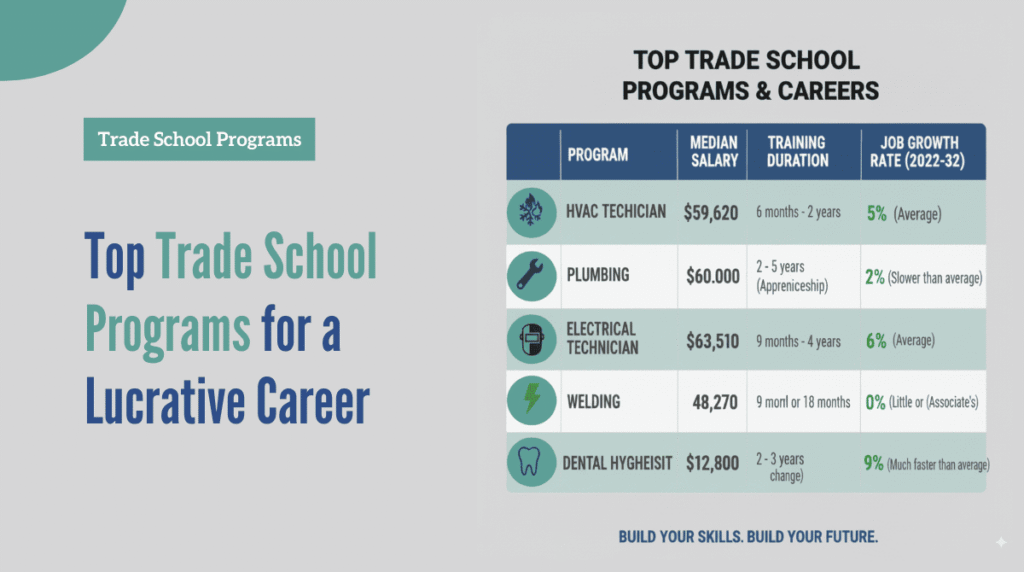
Comparison of Top Trade School Programs and Salaries
| Program | Median Salary | Training Duration | Job Growth Rate | Example Employers |
|---|---|---|---|---|
| HVAC Technician | $58,000 | 1-2 years | 9% | Carrier, Trane, Lennox |
| Plumbing | $70,000 | 1-2 years | 6% | Roto-Rooter, Local Unions |
| Electrical Technician | $61,000 | 1-2 years | 6% | IBEW, Local Contractors |
| Welding | $47,000 | 1-2 years | 3% | Bechtel, Jacobs Engineering |
| Dental Hygienist | $81,000 | 2-3 years | 11% | Dental Offices, Clinics |
2. Factors to Consider When Choosing a Trade School Program
Accreditation and Reputation
When considering a trade school, it’s crucial to verify the institution’s accreditation. Accredited programs ensure that students receive quality education and training that meets industry standards. Accreditation also plays a role in your ability to qualify for financial aid and secure jobs with reputable companies.
Curriculum and Hands-On Training
A good trade school will provide a well-rounded curriculum that includes both classroom instruction and hands-on training. Practical, real-world experience is essential for ensuring that you’re ready to enter the workforce immediately after graduation. Look for schools that partner with industries for internships or apprenticeship opportunities.
Job Placement Assistance
Job placement assistance is another essential factor to consider. Trade schools that offer strong career support programs often have partnerships with employers, helping students find job opportunities upon graduation. Some trade schools also offer post-graduation placement services to help students secure positions quickly.
Cost and Financial Aid
While trade school programs are typically more affordable than four-year degrees, the cost can still vary widely. Be sure to research the tuition rates of different schools and inquire about financial aid options. Many schools offer scholarships, grants, and payment plans to help students manage tuition costs.
3. Benefits of Attending a Trade School
Shorter Duration
One of the most significant advantages of trade school programs is their shorter duration. Most trade schools offer programs that can be completed in one to two years, compared to the four years typically required for a bachelor’s degree. This allows students to enter the workforce and start earning a salary much sooner.
Hands-On Learning
Trade schools emphasise hands-on learning, which helps students develop practical skills that are directly applicable to their chosen fields. This type of training ensures that graduates are prepared to meet the demands of the workforce immediately after completing their programs.
Job Security and High Earning Potential
Many trade school careers, such as plumbing, HVAC, and welding, offer job security due to high demand for skilled workers. In addition, these fields often come with attractive salaries, making trade school programs a viable option for individuals looking for high-paying careers without the long duration of traditional college degrees.
4. Top Features of a Great Trade School
Industry Partnerships
A great trade school will have partnerships with companies in the industries it serves. These partnerships can provide students with internship and apprenticeship opportunities that lead to real-world experience and job offers upon graduation.
Career Services
Look for schools that offer career services, including resume writing assistance, interview coaching, and job placement support. A strong career services team can help you navigate the job market and secure employment faster.
Alumni Network
A robust alum network can also be beneficial for trade school students. Alum networks provide opportunities for mentorship, job referrals, and networking within the industry.
Top Trade Schools and Their Programs
| School | Location(s) | Programs Offered | Notable Employers |
|---|---|---|---|
| Universal Technical Institute | Nationwide | Automotive, Diesel, Welding, Collision Repair | Ford, BMW, Tesla |
| Pennco Tech | New Jersey, Pennsylvania | HVAC, Automotive, Medical Assisting | Local Employers |
| Northwest Lineman College | Idaho, California, Texas, Florida | Power Line Training | Utility Companies |
| The Apprentice School | Virginia | Shipbuilding, Welding, Electrical | Newport News Shipbuilding |
| Maine Maritime Academy | Maine | Marine Engineering, Logistics | Maritime Industry |
The Economic Case for Trade School Education
Trade school represents a wise financial decision for many students. The cost of tuition is typically far lower than that of university degree programs. The program length is also much shorter. Most trade school courses take between several months and two years. This allows graduates to enter the workforce and start earning a salary quickly.
Many skilled trades offer pay that rivals or exceeds white-collar jobs. Job security is often very high in these fields. Society will always need electricians, plumbers, and HVAC technicians. These careers are also much more challenging to outsource to other countries. This provides long-term career stability for trade school graduates.
Key Advantages of Choosing a Trade School Path
Pursuing vocational training offers several distinct benefits.
- Lower Financial Burden: Significantly reduced tuition costs compared to college.
- Faster Time to Employment: Graduate and start your career in months, not years.
- High Demand Skills: Learn abilities employers are actively seeking.
- Hands-On Learning: Focus on practical skills rather than theoretical study.
- Strong Earning Potential: Many trades offer lucrative salary packages.
Conclusion
Choosing the right trade school program can set you on a path to a lucrative and stable career. With options in fields such as HVAC, plumbing, welding, and dental hygiene, there are ample opportunities for students to earn competitive salaries without the need for a four-year degree. By considering factors such as accreditation, program offerings, and job placement assistance, you can ensure that you are selecting the best trade school to help you achieve your career goals.
FAQs
What is the best trade school for a lucrative career?
The best trade school depends on your career goals. Programs in fields like HVAC, plumbing, and welding offer high salaries and strong job growth.
How long does it take to complete a trade school program?
Most trade school programs take between one and two years to complete, depending on the field and whether you attend full-time or part-time.
Are trade school programs expensive?
Trade school programs are more affordable than traditional college degrees. Many schools offer financial aid and payment plans to help students manage costs.
What are the job prospects after graduating from trade school?
Job prospects are strong in many trade school fields, including plumbing, HVAC, and welding, with high demand for skilled workers and competitive salaries.
Can I get a job right after finishing a trade school program?
Many trade school graduates find employment quickly due to the practical skills they’ve gained during their training. Some schools offer job placement assistance to help graduates secure positions.