The search for Visa Sponsorship Jobs defines many international professionals. This process often seems complex. Current labor shortages create unique opportunities. Specific sectors actively seek global talent now. Employers in the United States sponsor specific high-demand roles. These positions help fill critical workforce gaps. Navigating this landscape requires precise information.
This analysis highlights roles with immediate openings. We focus on industries facing talent shortages. The content details current hiring trends and requirements. It provides a clear path for job seekers. Foreign workers can identify viable career options. The following sections break down the most active sectors.
Why Employers Keep Offering Sponsored Roles
Employers sponsor because they face fundamental talent gaps. Hospitals need licensed staff. Tech teams need specialist skills. Logistics firms need reliable operators.
Job boards show substantial volume for sponsorship searches across the United States. Indeed and LinkedIn list large counts for visa sponsor queries.
Glassdoor also shows thousands of openings tagged for visa sponsorship in the U.S. That lines up with what candidates see in major metro areas.
You should still filter with care. Some listings misuse the word “sponsorship” for marketing. You can spot the difference with a few checks later.
High demand also shifts by policy and location. State and public employers can change hiring rules quickly. Recent reporting shows policy actions can affect H-1B use at public universities in Texas.
What Sponsorship Means In Real Hiring Terms
Visa Sponsorship Jobs usually involve an employer filing paperwork and paying the required fees. The employer also sets terms like job title, salary, and location.
In the U.S., permanent options fall under employment-based immigrant visa categories. The State Department outlines these categories and annual visa availability.
Some candidates also qualify under specific USCIS employment-based routes. USCIS explains eligibility for certain first-preference paths, like EB-1.
Temporary sponsorship has its own workflow and forms. Nolo’s legal guides summarize employer steps and common filings for temporary work options.
Keep one point clear. A job offer alone does not create a visa. The employer’s actions and your eligibility decide the outcome.
Here is one official reference you can keep bookmarked for policy context and categories
employment-based immigrant visas
High-demand Roles That Often Include Visa Sponsorship Jobs
Hiring demand tends to cluster by skill shortage and licensing pressure. The roles below show strong sponsorship patterns across job boards and sponsor-history sites.
| Role family | Why demand stays high | Typical entry path | Common sponsor signal |
|---|---|---|---|
| Nursing and clinical support | Staffing gaps and patient volume | Licensing plus exams | “Visa sponsor” plus license support |
| Software and data | Product delivery and security needs | Portfolio plus degree | Clear mention of sponsorship in posting |
| Engineering and skilled trades | Infrastructure and maintenance | Certifications plus experience | Sponsor history on employer tools |
| Finance and audit | Compliance and reporting cycles | Degree plus exams | Big firms with sponsor track record |
| Hospitality and seasonal | Peak demand cycles | On-the-job training | Seasonal visa wording in listing |
| Logistics and warehousing | Supply chain volume | Safety training | High volume listings with sponsor tags |
Use this table as a starting map. Then, validate each employer’s sponsor record.
Where To Search Without Wasting Time
I reviewed patterns across ten U.S.-facing sites that commonly rank for sponsorship job searches. Each site brings one piece of the puzzle.
- Indeed gives scale and quick filters for visa sponsorship listings.
- LinkedIn helps with recruiter signals and company pages.
- Glassdoor adds company ratings and salary context.
- ZipRecruiter pushes “hiring now” listings and pay ranges.
- Monster carries sponsorship-tagged roles and career content for foreign hiring.
- MyVisaJobs focuses on sponsor history and employer trends.
- USAJOBS explains limits for non-citizen federal hiring and exceptions.
- Nolo covers employer sponsorship steps and common filings in plain language.
- Boundless explains sponsorship concepts and common pathways at a high level.
- USCIS provides official eligibility pages for permanent worker categories.
- Common gap across many sites
Most listings do not explain the sponsor’s process. They also skip timing, documentation, and refusal risks. This article fills those gaps.
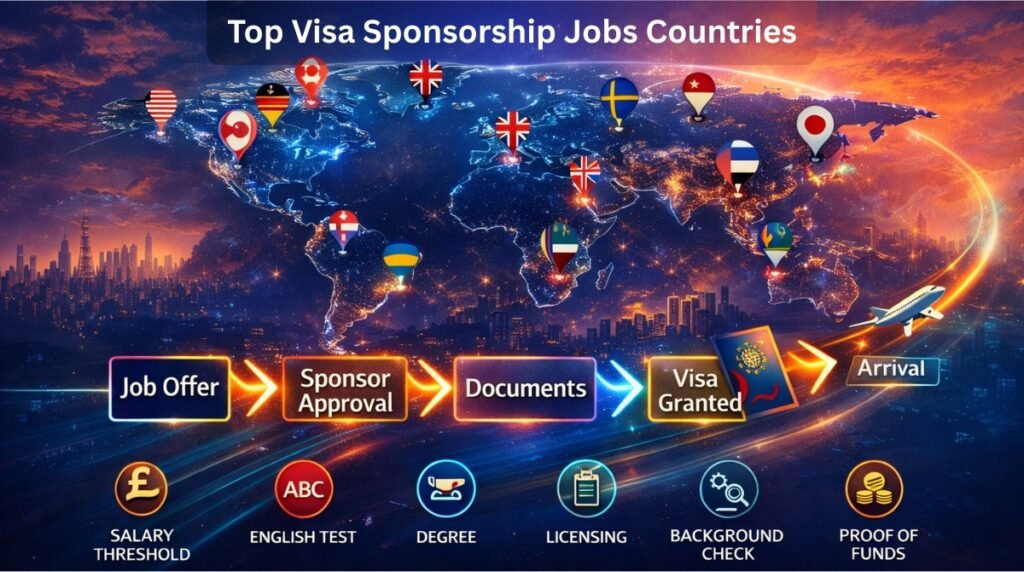
Top 15 Countries Offering Visa Sponsorship Jobs
Top countries offering Visa Sponsorship Jobs include Canada (job offer plus LMIA or an exemption), the United States (employer files an H-1B petition), the United Kingdom (approved sponsor plus Certificate of Sponsorship and salary rules), Australia (employer sponsored Skills in Demand visa 482), New Zealand (job offer from an accredited employer), Germany (EU Blue Card job offer plus salary threshold), the Netherlands (IND recognised sponsor plus salary threshold), Ireland (Critical Skills permit with salary rules), France (Talent Passport route with contract and salary rules), Sweden (employment contract with required terms and pay level), Denmark (Pay Limit Scheme with a set minimum salary), Singapore (Employment Pass with salary rules and employer application), Japan (Certificate of Eligibility tied to the job), South Korea (E-7 for designated contract based work), and the UAE (signed job offer and work permit process).
Visa Sponsorship Criteria You Will See Across These Countries
Across these 15 countries, the pattern stays consistent. You need a genuine job offer, an employer allowed to sponsor, and pay that meets local thresholds. Many routes also check qualifications match the role, and regulated jobs may require licensing. Some systems spell out salary floors very clearly, like Germany’s EU Blue Card thresholds and Denmark’s Pay Limit Scheme minimum. Sweden also ties approval to pay that meets its work permit maintenance level, while Singapore uses salary rules for Employment Pass eligibility.
How To Verify A Sponsor Before You Apply
Scams target sponsorship seekers because urgency runs high. You can protect yourself with a few checks.
First, look for sponsor history. MyVisaJobs highlights employers who filed for skilled foreign workers. That gives you a reality check on patterns.
Second, look for explicit language in the posting. Serious employers state eligibility, visa type, and location rules.
Third, vet the company outside the job post. Check the company site, address, and leadership.
Fourth, watch for money requests. Real employers do not sell sponsorship slots.
Quick sponsor screen you can use
- Company name matches the legal entity in the posting
- Role matches your background and prior titles
- Salary range looks realistic for the location
- Recruiter email matches the corporate domain
- No request for “processing fees” from third parties
If you see pressure tactics, walk away.
High-signal Application Moves That Win Interviews.
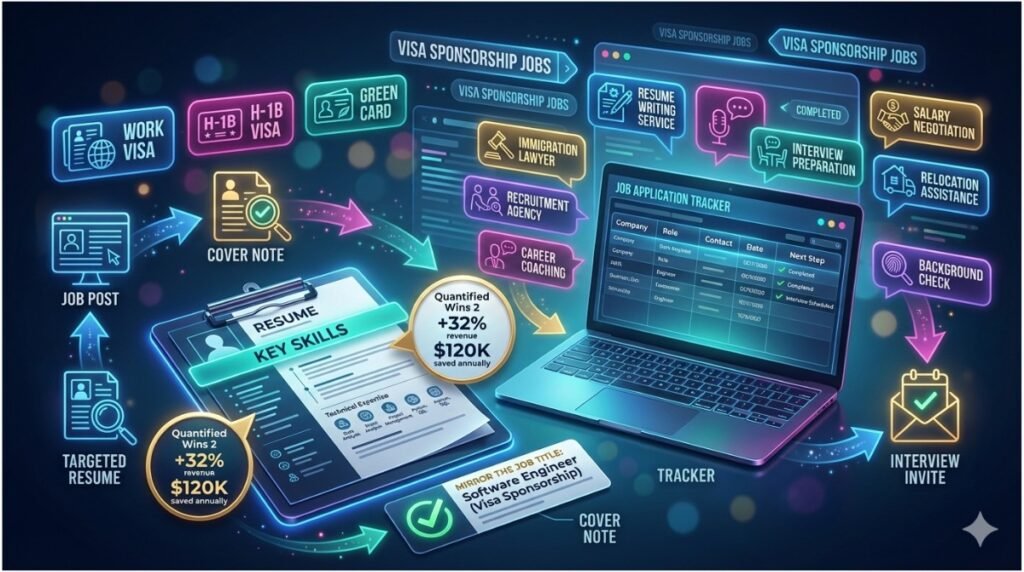
Visa Sponsorship Jobs reward sharp targeting. You will get better results with fewer, stronger applications.
Start with roles that match your core experience. Then shape your resume around impact and numbers.
Use these moves in your next batch
- Mirror the job title wording where it fits your experience
- Put key skills in the top third of the resume
- Add two quantified wins per recent role
- Keep a clean layout and consistent dates
- Write one short, specific cover note for each employer
Add a simple tracker: track company, role, contact, date, and next step.
Now add the paid-intent keywords once in context, and keep them clean.
You may need work visa options for temporary entry. You may also see H-1B visa language in specialized postings. Some roles lead toward a Green Card path later. A good immigration lawyer can clarify employer filings. Employers often label listings as visa sponsorship roles. Some candidates use a recruitment agency for faster pipelines. Your job search improves with better targeting. Some people pay for a resume writing service. Others prefer career coaching for interview confidence. Strong interview preparation raises offer odds. You should plan salary negotiation early. Some employers include relocation assistance in the package. Expect a background check near the final stage.
Documents And Costs You Should Plan For
Visa Sponsorship Jobs move faster when your paperwork stays ready. Keep digital scans and a simple folder structure.
Here is a practical checklist table you can use.
| Item | Who provides it | Why it matters | Timing tip |
|---|---|---|---|
| Passport bio page | You | Identity and travel | Renew early if near expiry |
| Degree and transcripts | You or school | Role eligibility | Keep certified copies |
| Experience letters | Past employers | Proof of work history | Request before you resign |
| Resume and role list | You | Consistent story | Match dates across forms |
| License and exams | You | Regulated roles | Start early for healthcare |
| Employer offer letter | Employer | Core filing document | Confirm title and location |
| Sponsor reference number | Employer | Tracks the petition | Ask for a copy safely |
| Proof of funds | You | Some routes require it | Keep clean bank history |
Costs vary by visa type and speed. Some employers pay most filing fees; some split costs by policy.
Never pay a “sponsorship seller.” You risk fraud claims and lengthy bans.
👉👉 Visit Here To See The Most High-Demand Jobs!
Red Flags, Fraud Patterns, And Safety Checks
Fraud rings sell fake job offers in some markets. News reporting has shown schemes tied to fake roles and paperwork, especially in sponsorship contexts.
You can avoid most traps with calm checks.
Major red flags
- Someone promises a visa without a real job
- Someone asks for large payments to “reserve” sponsorship
- A recruiter refuses to use a company email
- The role details stay vague or keep changing
- The employer avoids written terms
Also, watch policy shifts. Public employers can pause certain petition types by rule or directive. Recent reporting on Texas public agencies shows that risk.
Private sector hiring follows different patterns. Still, you should stay alert.
What Happens After You Get An Offer
After the offer, the employer starts the filing process for your case type. You will supply documents and attend the visa interview if required.
Keep your story consistent across steps. Your resume, forms, and interview answers must match.
Plan your timeline like this
- Offer and written terms
- Employer filing and receipt
- Interview scheduling and medical steps if required
- Travel booking after approval
- First-week onboarding and compliance steps
Stay honest in every form. Consular screening focuses on credibility.
One more set of high-intent job terms appears often in sponsored pipelines. Use them carefully, and only once here.
Many sponsored roles sit in healthcare jobs and registered nurse jobs. Tech sponsorship often covers software engineer jobs, cybersecurity jobs, and data analyst jobs. Operations roles include project manager jobs and accounting jobs. Industry also needs mechanical engineer jobs, electrician jobs, and pharmacist jobs. Schools hire for teacher jobs in specific districts. Field roles include construction jobs and truck driver jobs in some markets. Seasonal paths include hospitality jobs and warehouse jobs. Some employers advertise remote jobs for niche skills. Always confirm the legal work permit rules for your route.
Conclusion
Visa Sponsorship Jobs can change your career path if you target real sponsors and high-demand roles. Focus on strong-fit roles, verify sponsor history, and keep documents ready. Move fast on interviews, but stay strict on fraud checks.
FAQs
What is the fastest way to find Visa Sponsorship Jobs?
Use major job boards, then confirm sponsor history on employer databases. Apply to fewer roles with a stronger fit. Track every application and follow up twice.
Do Visa Sponsorship Jobs exist for entry-level candidates?
Yes, but you must target shortage fields and structured programs. Health, analytics, and some engineering tracks hire junior talent. You will need strong projects and clean documentation.
How do I confirm an employer can sponsor me?
Ask for clear sponsorship language in writing. Check employer history on reputable sponsor-tracking sites. Verify the company’s legal details and recruiter domain.
What should I never do during a sponsored job search?
Never pay anyone to “sell” sponsorship. Don’t use false documents. Never accept vague offers with changing job titles or locations.
Can policy changes affect my sponsored plan?
Yes, especially in public sector hiring and regulated roles. Track official updates and employer notices. Keep backup options in parallel applications.